ROOTED HERE
The history of Cedar Rapids
The Cedar River runs through Cedar Rapids, linking its downtown setting with a wider city of neighborhoods. Czech Village and New Bohemia add local shops, dining and cultural history to a visit.
People who shaped Cedar Rapids
These milestones are an introduction, not a complete local history. Follow the linked city and museum sources to explore the people and places behind them.Read the local historical account.
Watch the city’s history

FROM THE ARCHIVES
Cedar Rapids History: Douglas and Company
Brucemore examines the 1919 Douglas Starch Works explosion and its effects on Cedar Rapids.
Watch on YouTube ↗- 1840s
A river village grows
Cedar Rapids developed from a small village on the Cedar River. Efforts to secure railroad connections helped turn the settlement into an important industrial community in eastern Iowa.
Cedar Rapids Tourism ↗ - 1871–1873
Food processing takes root
The T. M. Sinclair packing company began in 1871, and the city's oat-milling industry developed in the same era. Processing agricultural products became a defining part of the local economy.
Cedar Rapids Tourism ↗ - 1880
A major opera house
Greene's Opera House opened in 1880. The venue reflected an early commitment to cultural life alongside the mills, rail connections and manufacturing businesses.
Cedar Rapids Tourism ↗ - 1908
Civic life on an island
Development of Municipal Island began in 1908. The island setting created an unusual civic center within the river that had helped shape the city's economy and geography.
Cedar Rapids Tourism ↗ - 1910
Architecture in the commercial center
Louis Sullivan designed the People's Bank in 1910. The building added a distinctive architectural landmark to a city whose historic neighborhoods also reflect Czech and other immigrant communities.
Cedar Rapids Tourism ↗
See the history for yourself.
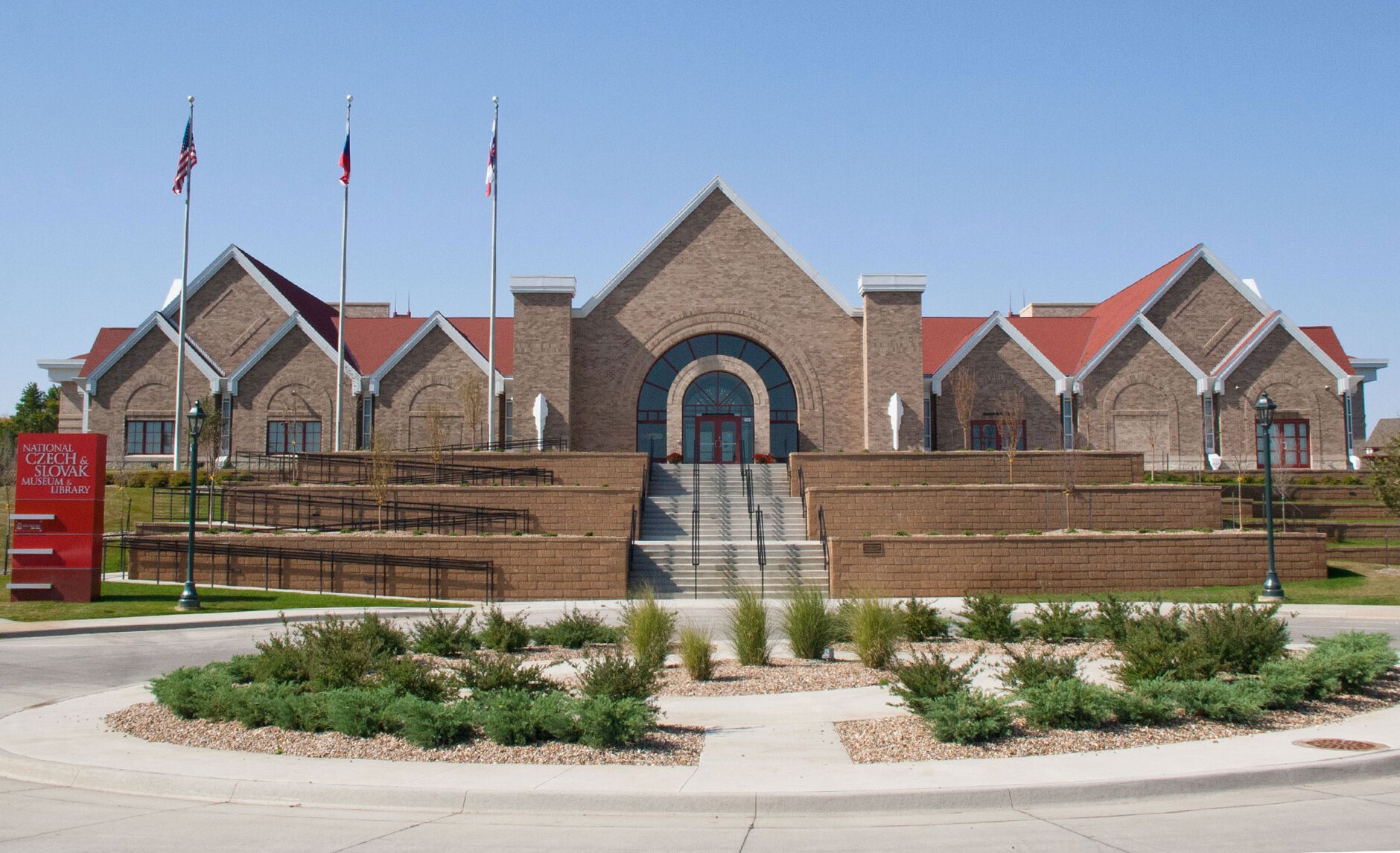
Check current opening hours and visitor information before you go: the National Czech and Slovak Museum & Library.
For local services and public information, the local government website is a starting point. For historical research, consult local libraries, archives and museums and check collection-specific image permissions.
Selected milestones from the linked historical sources. This is an introduction, not a complete account of the city’s history.